When someone is stuck, whether it’s a landlord who won’t answer, a benefits form they can’t read, or a shelter bed they can’t get, they usually hear, “Just call 211.”
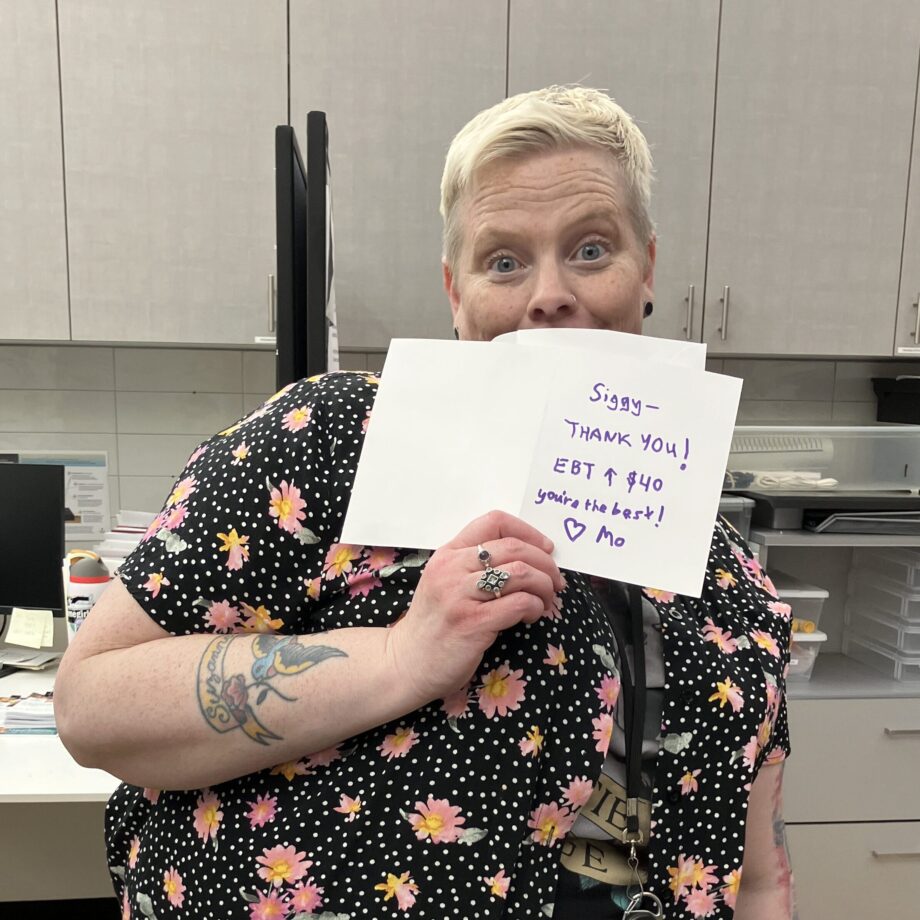
Siggy, our Member Support Coordinator, knows that advice doesn’t work for many of the people she works with.
“You call, and they text you a list,” she explains. “Not everybody has a phone. Some people can’t hear, or can’t see, or can’t dial. You’re just supposed to figure it out.”
At larger agencies downtown, two case managers can be responsible for 500 people. Because Maybelle is small, Siggy can do something rare: she sits down with each person and works through the problem with them, step by step. She helps Members keep their SNAP food benefits and file complaints when housing problems drag on. One Member, who is blind, waited more than nine months to be approved for a home helper. Three agencies had to sign off. With Siggy’s help, they got it done.
“I don’t want to just do the thing for the person. I want them to learn how to do it,” she says.
And sometimes all that is really needed is “somebody to sit next to you while you call and make an appointment.”
Siggy knows these systems firsthand. She lived at Macdonald West, our affordable housing in Old Town, for nearly ten years. It’s where she got clean and sober and found stability with her mental health. Today she provides resident services in that same building, and many Residents knew her as a neighbor before they knew her as staff.
“You can feel it when you’re asking for help,” she says. “Is a person really with you, really wanting to solve the problem? Or are they just there to say, ‘Here’s a phone number’?”
For Siggy, that’s what belonging looks like. “It can be so isolating to not be able to navigate something,” she says. “To actually sit and take the time with somebody, I feel like that’s what belonging is, really.”

