Jill & Sue
We don’t move people through services. We get to know them.
Traditional services provide essential support. But they aren’t designed for the kind of sustained relationships that make belonging possible. They’re built to address immediate needs, move people through, and move on.
That speed can strip away the very autonomy, self-worth, and human connection that make health and healing possible. The Portlanders we serve interact with these systems regularly. What they rarely find there is a space for social health: for relationships, for belonging, for the chance to be known.
Maybelle Center was built to fill that gap. Our three pillars—Neighborhood Programs, Macdonald Residence, and Macdonald West—are interdependent by design. Together, they don’t just manage the symptoms of social isolation. They address the root causes. Most systems show up after things fall apart. Maybelle Center tries to make sure they don’t fall apart in the first place.
Being known for who you are, not defined by your circumstances, is where belonging begins.
Our Approach
Mary-Ann & Vince
Focused where the need is greatest
We prioritize adults in downtown Portland navigating mental health challenges and financial hardship because they experience social isolation at significantly higher rates than the general public. The CDC identifies low income and psychiatric conditions as documented risk factors for social isolation. And downtown Portland has nearly 4x more regulated affordable housing than any other neighborhood, concentrating that unmet social health need in one place.
Our doors are open to all neighbors who need to belong. But our resources, our programs, and our presence are intentionally concentrated where isolation runs deepest.
Your zip code shouldn’t determine your health. Neither should your social circle.
Evidence-based. Human-centered.
Every Neighborhood Program at Maybelle Center is designed around the Belonging Barometer, the most comprehensive study of belonging to date. The study outlines nine measurable building blocks across three core dimensions that work together to foster true belonging:
- Connection: feeling seen, known, and valued by others
- Psychological Safety: the freedom to be authentic without fear of judgment
- Co-Creation: having a real role in shaping shared spaces and experiences
We intentionally design each program to activate at least two of these building blocks per session. Together, Neighborhood Programs engage all nine, making Maybelle one of the few organizations in the region operating at this level of intentionality.
See our Blueprint for Belonging to learn more
Shane & Amy
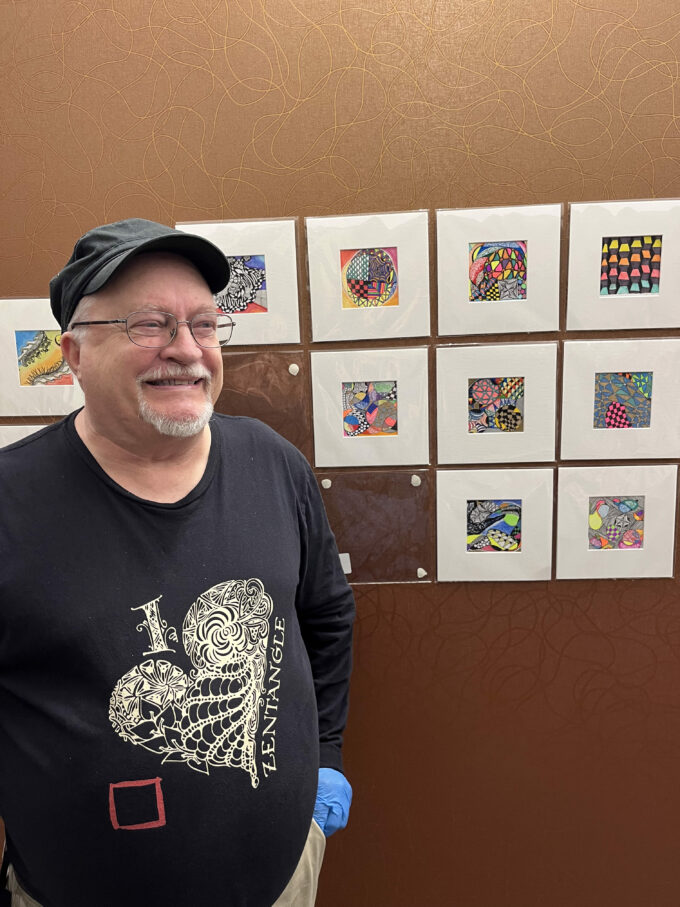
John
The practices behind the programs.
Woven into every class, group, and gathering in Neighborhood Programs are four belonging practices drawn from UC Berkeley’s Othering & Belonging Institute:
Targeted Universalism
Tailoring strategies to address the specific barriers faced by neighbors navigating mental health challenges or financial hardship, while welcoming all Portlanders.
Bridging
Building relationships across lines of difference to foster empathy and solidarity between people whose paths might not otherwise cross.
Narratives
Amplifying Member voices and reshaping the stories we tell about who belongs and who matters.
Arts and Culture
Centering creative expression as a channel for identity, community celebration, and shared meaning.
Chronic social isolation is not a story of individual struggle. It’s the predictable outcome of systems never built to treat belonging as what it actually is: a foundation for health.
Our Values
Every Person Matters: Every person has an inherent and intrinsic value. Every one of us is important, and no one is better than, or exists above anyone else.
We Are All Interconnected: Humans are fundamentally social beings who move through life serving others and being served. Every day, we interact with people from different walks of life, cultures, and backgrounds, and we recognize that every person has an important part to play.
We Learn Together: We all have something to learn from each other. Being open to others’ experiences and knowledge are the seeds that ensure we flourish and grow.
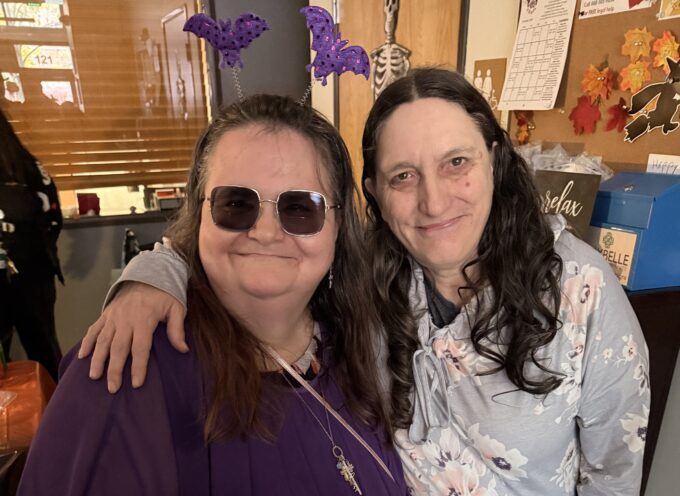
Wendy & Kathy
Our Values in Action: Resource Navigation
For adults navigating mental health challenges and financial hardship, barriers to resources are rarely straightforward.
A missed appointment, an unfamiliar system, or a form that requires an advocate can derail stability that took years to build. Traditional social service systems are built to move people through quickly – not to sit with them, figure it out alongside them, or show up again when something goes wrong.
At Maybelle Center, resource navigation is built into Neighborhood Programs by design. One dedicated staff member works one-on-one with Members to navigate healthcare, housing, technology, and other resources – through informal daily interactions, direct advocacy, and Maybelle’s institutional relationships with local service providers. Not as a caseworker moving people through a system, but as a neighbor helping a neighbor figure it out together.
It’s one more way we build what’s missing.
FAQ
What is a Community Health Organization?
Simply, it’s an organization that uses non-clinical approaches to improve health, prevent disease, and reduce health disparities in a specific population.
What is Social Health?
Social Health is the aspect of overall health that stems from relationships, both at the level of individual connection and a broader sense of community. Said another way, it’s about having close bonds with family and friends, enjoying a sense of belonging to groups, and feeling supported, valued, and loved.
How is Social Health related to Physical or Mental Health?
Social health is one aspect of overall health; physical health relates to the body, mental health relates to the mind, and social health relates to relationships. Social relationships impact our mental health, physical health, and mortality risk. If you weaken one pillar, the structure could fall.
Belonging is as important as our need for love and as necessary to our survival as food or water.
The Belonging Barometer: The State of Belonging in the US, 2023
Large percentages of Americans feel like they are ‘treated as less than others’ in their daily lives, and this experience is associated with non-belonging across all life settings.
The Belonging Barometer: The State of Belonging in the US. 2023