2026 Impact Report
Health Begins With Belonging
Assisted Living
Affordable Housing
Neighborhood Programs
About Maybelle Center
Where our Members live
Our Mt. Hood trip
Letter from our ED
Interview with Members Jill & Donika
Belonging Barometer
Navigating a fractured safety net
Your impact, by the numbers
Funding & what you make possible
Our board & supporters
Family Reunion Fundraiser, May 6, 2027
Wildwood Trip
Belonging Starts HERE
At Maybelle Center, in the heart of PDX
For adults navigating mental health challenges or financial hardship, being excluded from work, school, and community can mean losing something vital: being seen, known, and connected.
Without those connections, isolation takes hold and compounds over time. It erodes physical and mental health. Life becomes less stable, and care and advocacy get harder to find when they matter most. Slowly, isolation can harden into a quiet conviction: I don’t matter. I have nothing to offer. The world has moved on without me.
This isn’t personal failure. Hospitals treat illness. Shelters provide a bed. Social services meet basic needs. But none of them are built for social health: the relationships and support that help us stay well.
We build what’s missing.
Maybelle Center is a community health organization working alongside neighbors in downtown Portland to address the root causes of social isolation. For more than 30 years, we’ve used belonging as our health intervention.
Through assisted living, affordable housing, and neighborhood programs, we create spaces where dignity comes first, where people are known by name, and relationships grow over time.
Because belonging isn't a privilege. It's a foundation for health.
Did you know?
Chronic social isolation carries a similar mortality risk as smoking 15 cigarettes a day!
Holt-Lunstad J, Smith TB, Layton JB (2010), Social Relationships and Mortality Risk: A Meta-analytic Review.
Belonging Travels With Members
Where our Members live
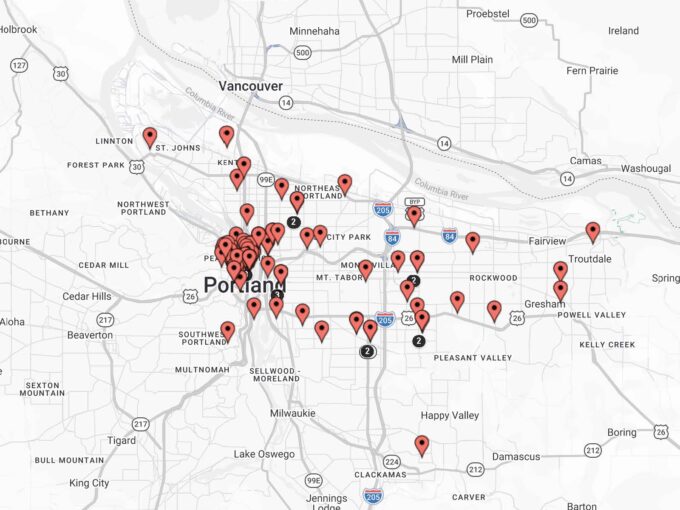
Roughly a third of our Members participating in Neighborhood Programs live outside downtown. Most started here while living in the neighborhood and stayed connected after they moved. Every one of them came back at least once this year.
"I feel included. There is a sense of community here. That’s what I’ve been looking for all my life."
Wendy, Maybelle Center Member and Board Member
Behind Every Ride to Wildwood
Our Mt. Hood trip
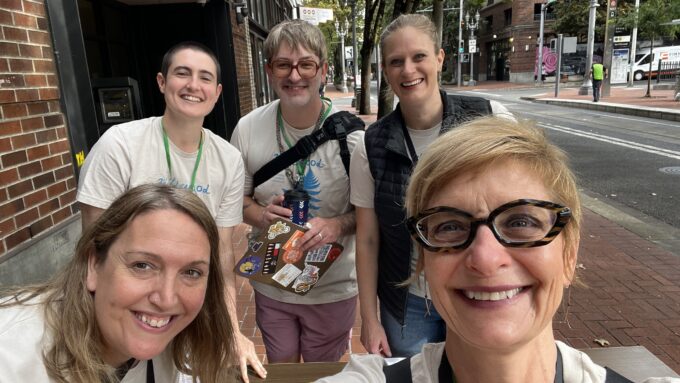
Jen, Savannah, Shane, Jillianne & Michelle
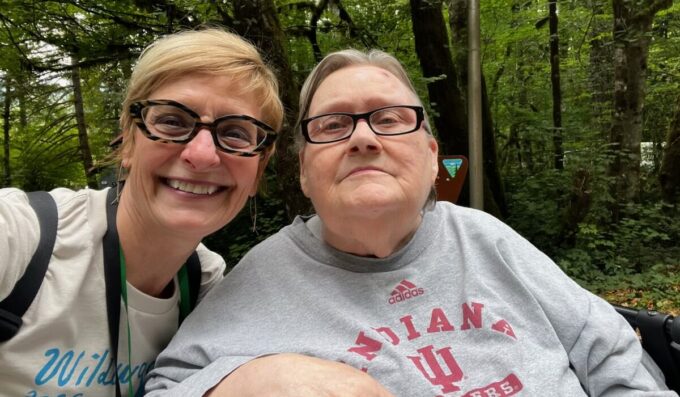
Michelle & Bonnie
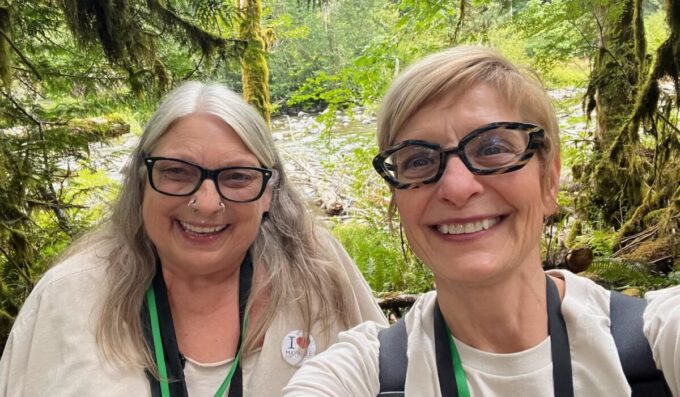
Barbara & Michelle
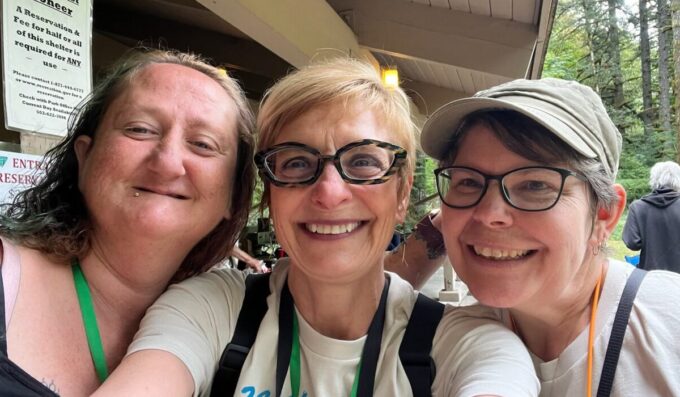
Rebecca, Michelle & Jenna
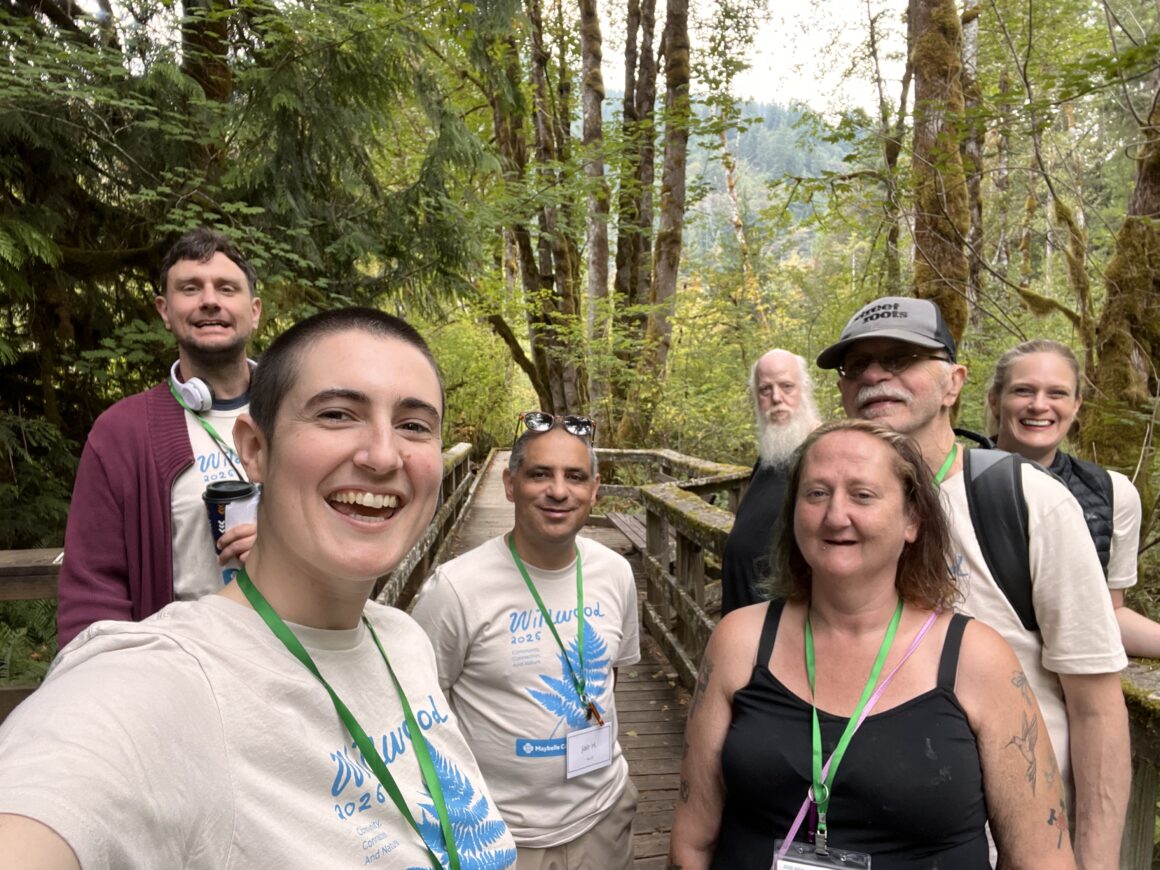
The secret is out! Our annual Member excursion to Mt. Hood is one of Michelle’s favorite days of the year, and it shows. Wildwood always comes with plenty of photo stops.
■ Behind every ride to Wildwood is a donor like you.
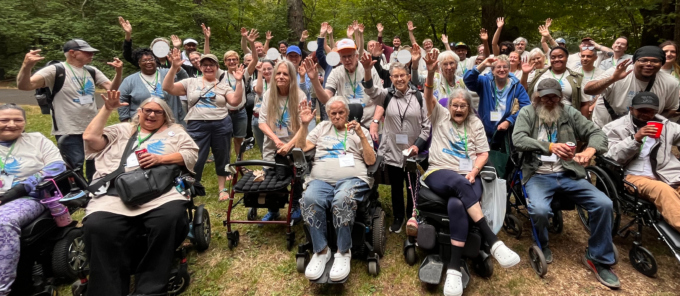
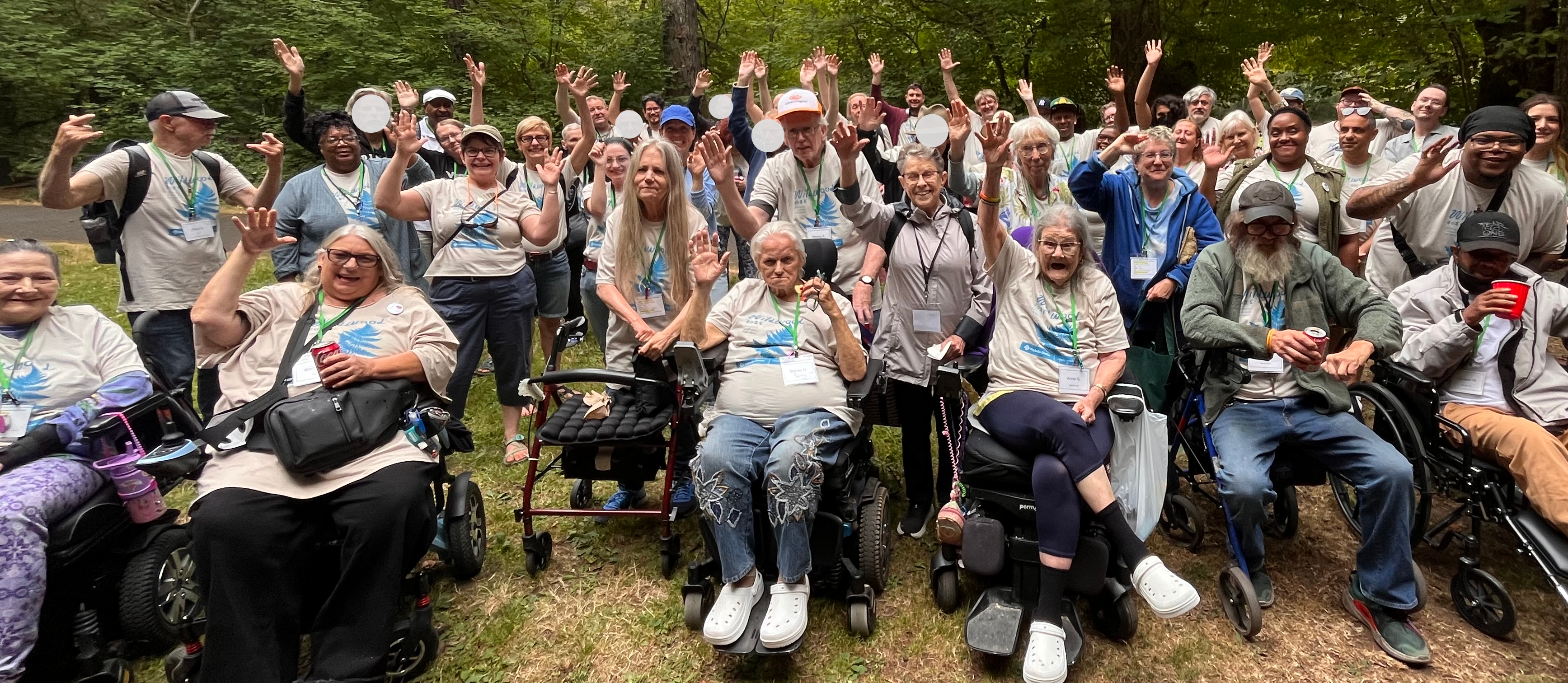
Your gifts make our yearly Member trip to Mt. Hood possible: a big picnic in the park with accessible trails and even a fish-viewing area. For many Members without a car, it’s one of the only days all year they trade city pavement for trees.
Because the woods should be for all of us, your gifts make it possible for Members like Bonnie to come along, with accessible transportation and space for caregivers. You also make it the kind of day that brings friends like Barbara back, even after they’ve moved away.
And on the long ride there and back, you give people something a busy room can’t: time to really talk.
Why We Chose Belonging
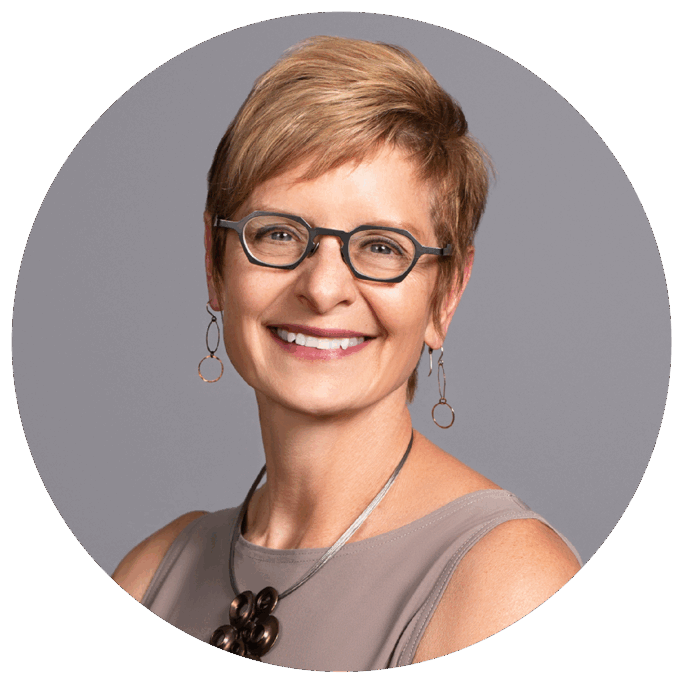
Letter from Michelle Meyer, ED
Dear Friends and Colleagues,
Everybody expects numbers in a report like this. You will find some inside, and we take them seriously. But a number cannot hold what it feels like to matter, to be seen, to be wanted in the room. There is no shortcut to knowing someone. You show up, and then you show up again. What spreads beyond those relationships is what a neighborhood comes to expect of itself, and who gets treated like they belong here. That is slow work, and most of it happens out of view.
That conviction is written into our mission, and the order of the words was a decision. Our mission is: to create inclusive opportunities to experience belonging that help reverse human isolation and its root causes, so people feel like they matter and play a role in our shared future.
Notice what comes first. We could have written that sentence the other way around. Reducing isolation is familiar language in our field. It names a problem that can be counted and promises to shrink it. But if reducing isolation were our stated goal, every Member would be defined by an absence before we ever met them. So we put belonging first on purpose.
Belonging is not simply a feeling or a social benefit. It is part of what makes health possible. That’s why we design for it every day in our assisted living and affordable housing, in the Community Room, and through the activities and outings we share with Members and Residents.
The sections below show what belonging requires, how we’re learning to measure it, and how we’re sharing what we’re learning. Mostly, they give you a glimpse of what this looks like for the people we know by name. Like Darwin. Like Jill and Donika.
The year ahead will ask us to keep making this choice: to see people not through the problems they face, but through their capacity to contribute, connect, and shape their communities. That is harder than measuring isolation alone. Thank you for choosing it with us.
With gratitude,

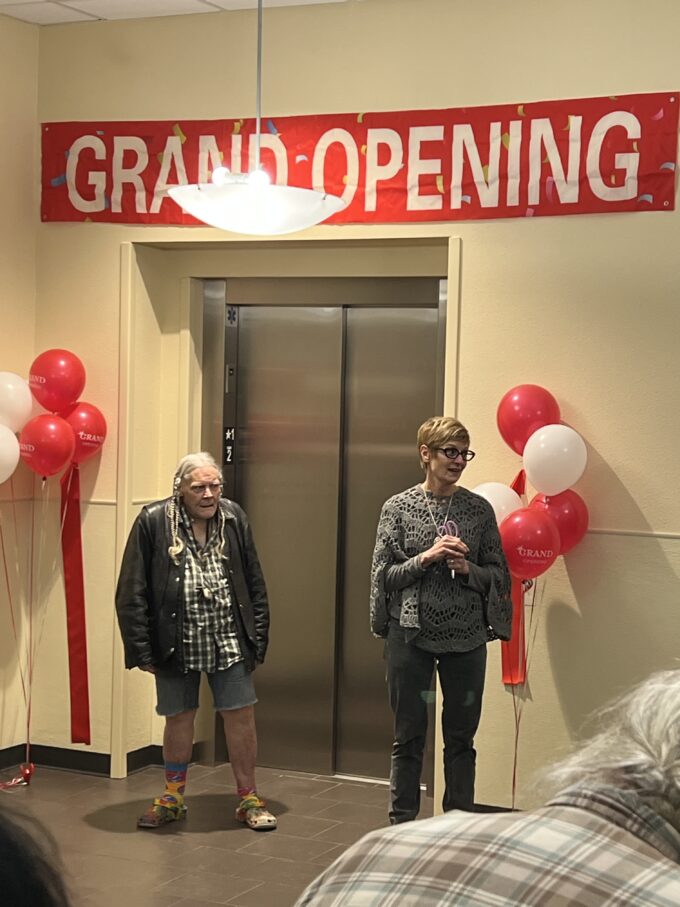
Darwin & Michelle
Darwin takes the inaugural ride on the new elevator at Macdonald Residence Assisted Living in November 2025. Most Residents use a mobility device, and for years a single elevator breakdown meant being carried down the stairs by hand in an evacuation chair while their powerchair stayed upstairs. They could leave the building, but only if someone pushed them.
A small thing to celebrate, and a big change in daily life: now nobody has to ask for a push.
How Belonging Feels
Interview with Members, Jill & Donika
This Is Where I Fit In
Jill is the friend who goes to the store when you need something. “It’s a good feeling to help out someone,” she says.
Being there for others comes naturally to her. Finding people she can trust and a place to belong has been harder. “I’ve never fit in,” she says. Meeting new people still makes her anxious.
Two friends and bingo
Jill signed up as a Maybelle Center Member three years before she ever came inside. Then two Members, Leila and Rodney, met her on the sidewalk and kept inviting her to Friday bingo.
She walked in nervous. “And then it was like nothing,” Jill says. “Everybody knew my name in two minutes.”
Building trust, one Thursday at a time
Trust comes from small things. “I put my bag there, and nobody will touch it,” Jill says. “That’s something big here.” She can also open up to staff and other Members. “It’s just nice to know that I can talk to anybody here about anything,” she says. On Thursday movie days, she loves “just being together with people that I can trust.”
Jill knows what she needs. When her anxiety rises, she steps outside, calms down, and comes back in. For her, it’s worth it. “I finally found someplace since high school that I fit into,” she says, “and this is where I fit in.”
Connection and recovery
Jill and Donika are both in recovery. Jill has more than a year. Donika marked three years in October.
For Jill, recovery and belonging are linked. “I’ve never fit in. That’s why I did drugs a lot,” she says. “And now that I have this place, I don’t need to do drugs because I can come talk to anyone.”
Donika sees it similarly: “Connection is the opposite of addiction. When you feel connected, you don’t really feel like you need addiction.”
A voice in how things work
Jill also helps shape the community. She noticed bingo prizes often included candles, which many Members can’t light at home. She spoke up. The next prize was a diffuser.
“They take our suggestions, and they immediately implement them,” Donika says. “It makes us feel very important.”
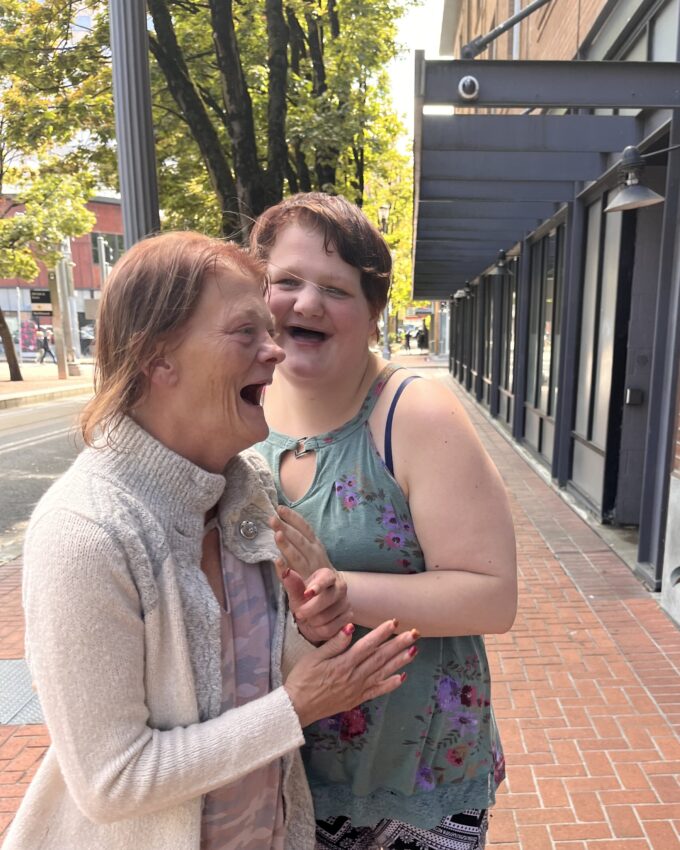
Jill & Donika
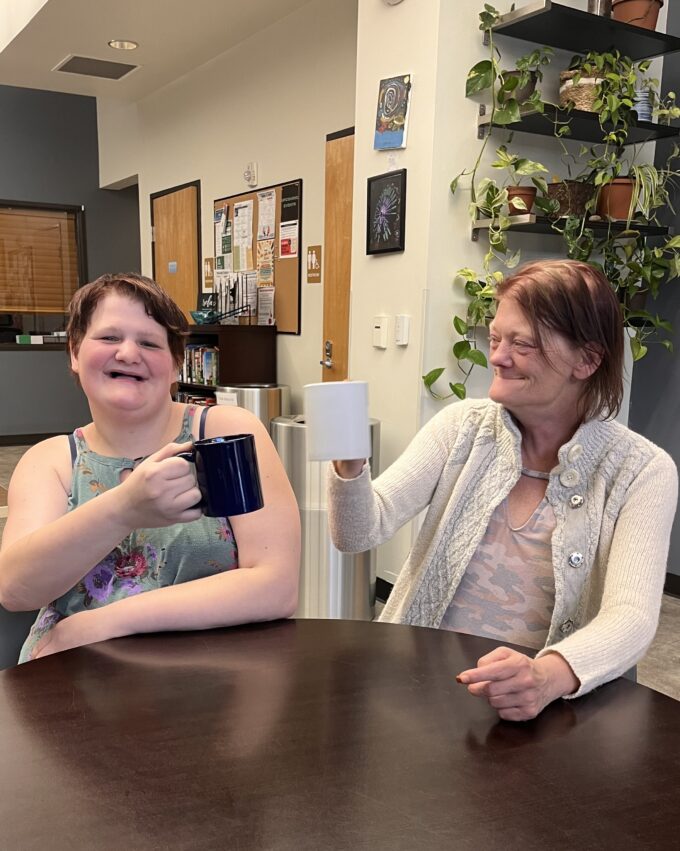
Donika & Jill
“I finally found some place since high school that I fit into.”
Jill, Maybelle Center Member
Family, in every sense
Donika is now a Member too, and she cares for her mom at home. The two don’t always see eye to eye. Asked about her favorite activity at Maybelle Center, Jill says, “I like the mocha coffee.”
“That’s not an activity,” Donika says.
“I know,” Jill says.
But they’ve kept one rule since Donika was born: every night ends with ‘I love you.’ “It relieves a lot of madness,” Jill says, “when you say, I’m sorry, and I love you.”
Donika has found her place here, too. She signed up for the Member Talent Show and has taught student visitors to play Magic: The Gathering.
What comes next
Jill hopes more people find what she has here. “This is what people need,” she says. “Programs that you can walk into and not be judged, shamed, or discarded.”
Her advice for anyone still standing outside the door? “Take the plunge, because this is like a family.” Here, she says, it doesn’t matter who you are or where you come from. “It matters that we’re here together.”
■ Behind every open door and every familiar face is a donor who made it possible. Thank you for helping build a place where Jill and Donika belong.
How we measure belonging
In February 2026, we surveyed our 210 active Members. 70% of those who responded said they feel a sense of belonging in the Maybelle Center community. We use the Belonging Barometer from Over Zero and the American Immigration Council that asks whether people feel connected, feel valued, and have a voice. Jill’s bingo prize idea is a great example of having a voice.
What Belonging Requires
Navigating a fractured safety net
Somebody to Sit Next to You
When someone is stuck, whether it’s a landlord who won’t answer, a benefits form they can’t read, or a shelter bed they can’t get, they usually hear, “Just call 211.”
Siggy, our Member Support Coordinator, knows that advice doesn’t work for many of the people she works with.
“You call, and they text you a list,” she explains. “Not everybody has a phone. Some people can’t hear, or can’t see, or can’t dial. You’re just supposed to figure it out.”
At larger agencies downtown, two case managers can be responsible for 500 people. Because Maybelle is small, Siggy can do something rare: she sits down with each person and works through the problem with them, step by step. She helps Members keep their SNAP food benefits and file complaints when housing problems drag on. One Member, who is blind, waited more than nine months to be approved for a home helper. Three agencies had to sign off. With Siggy’s help, they got it done.
“I don’t want to just do the thing for the person. I want them to learn how to do it,” she says. And sometimes all that is really needed is “somebody to sit next to you while you call and make an appointment.”
Siggy knows these systems firsthand. She lived at Macdonald West, our affordable housing in Old Town, for nearly ten years. It’s where she got clean and sober and found stability with her mental health. Today she provides resident services in that same building, and many Residents knew her as a neighbor before they knew her as staff.
“You can feel it when you’re asking for help,” she says. “Is a person really with you, really wanting to solve the problem? Or are they just there to say, ‘Here’s a phone number’?”
For Siggy, that’s what belonging looks like. “It can be so isolating to not be able to navigate something,” she says. “To actually sit and take the time with somebody, I feel like that’s what belonging is, really.”
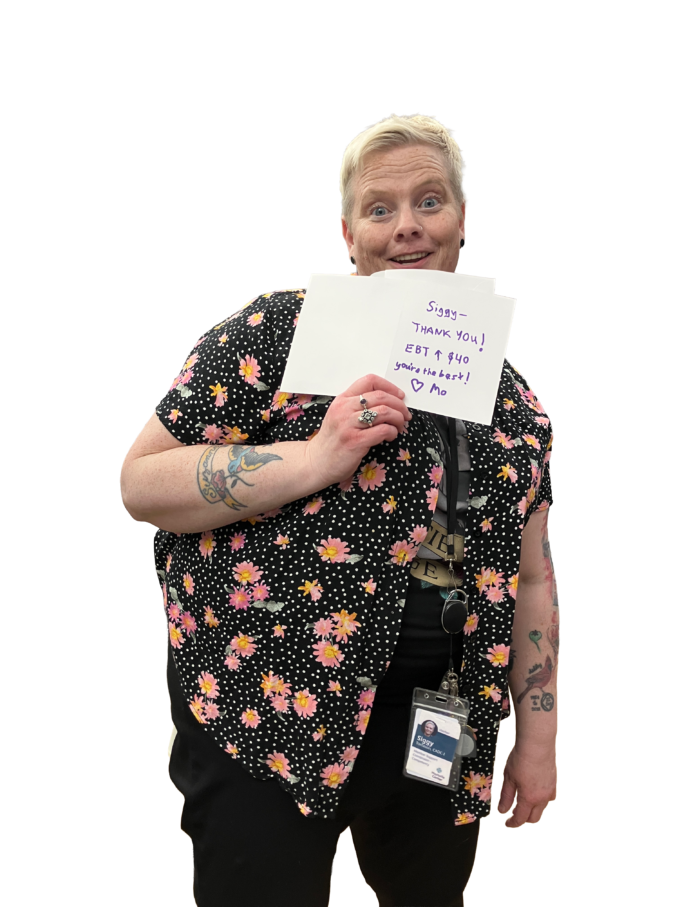
Siggy
I feel like I have the best job here, because I can actually make some kind of change in a way that I can see.
Siggy, Maybelle Center Member Support Coordinator
What We Can Demonstrate
Your impact, by the numbers
Through arts, social groups, weekly visits, and our drop-in Community Room, we create spaces where neighbors are known for who they are, not their circumstances. Programs meet at our Center in Old Town or in one of 35+ affordable housing buildings where Members live. Membership is free and never expires.
Macdonald Residence welcomes adults with complex behavioral health needs who are often turned away by other facilities. Here, dignity comes first, and Residents are known and valued.
That’s not incidental to the care. It is the care.
Of those Residents:
At Macdonald West, our 42 affordable apartments in Old Town become a platform for belonging. On-site staff connect Residents to resources and, from day one, welcome them into the broader Maybelle community, where people are known by name.
In 2026, Maybelle Center was invited into national conversations about measuring belonging:
Unlocking Belonging Summit
AIC Center for Inclusion & Belonging
Advisory Committee & breakout session leader
Building Together Conference
Council on Foundations
Panelist at most-attended breakout session
Learning Across Differences Ideas Forum
Council on Foundations
Presenter with 120+ registered attendees
What Sustains This Work
Funding & what you make possible
2025
State funding covers assisted living care. Your gifts make everything else possible.
Where our money came from
$10.0M total*
How we used it
$10.4M total**
Balance sheet
Most of our assets are the buildings we own where Residents live and Members gather.
*Doesn’t include $3.9 million in capital funding raised for the Macdonald Residence elevator and mini-splits. The project kept three rooms empty from June to December, resulting in reduced revenue.
**Doesn’t include depreciation (a non-cash expense).
You fund the infrastructure of belonging
Since 1991, our neighborhood work has run almost entirely on donor gifts.
Your gift pays for the birthday cake and the coffee. The bus for a trip to Mt. Hood. Art supplies for a project Members make together. And the staff who show up, at the Center and in partner buildings across downtown, so people can be together. Those visits turn strangers into neighbors who notice when someone’s missing.
Thank you for making afternoons like these ordinary instead of rare.
What your gifts look like on any given afternoon with Neighborhood Programs
With Gratitude
Our board & supporters
Fr. John Donato, C.S.C., President
Tom Doyle, Vice President
Jan Romano, Treasurer
Nhi Nguyen, Secretary
Alice Bergman
Peggy Brey
Sam Byers
Carol Dodson
Sarah Foote
Sharon Peters
Kevin Shields
Wendy Shumway
Jackie Smith
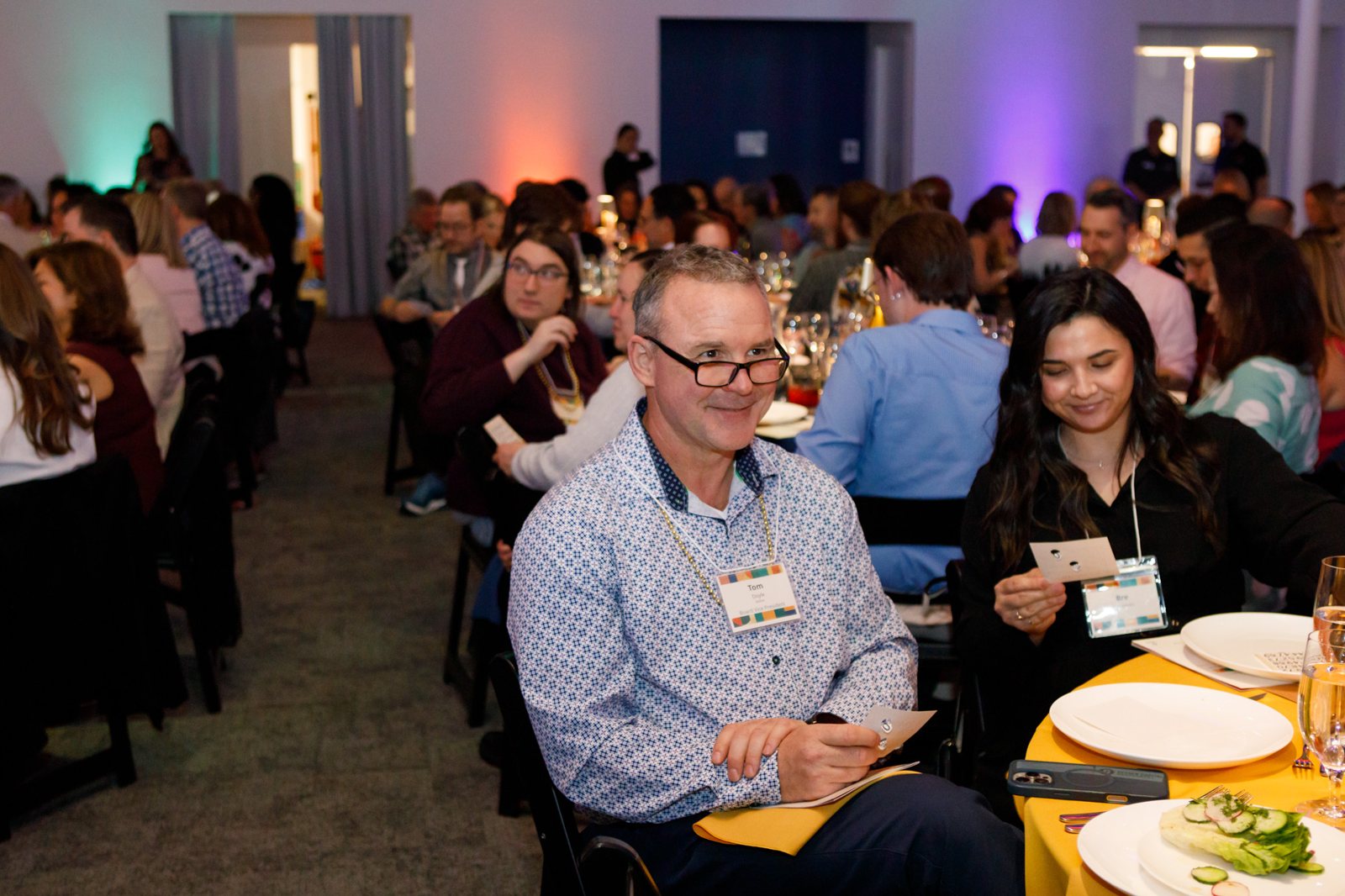
Tom (left) at our 2026 Family Reunion Fundraiser
We should pay attention to what happens in this little place in Old Town, because it should be happening throughout the world!
Tom Doyle
Tom Doyle is our Board Vice President and Director of Nonprofit Services at Becker Capital Management. As a board member, he sees our work up close, and he gets why belonging matters. “We don’t thrive if we’re not known, if we’re not loved, if we’re not cared for,” he says.
It’s why our longtime partnership with Becker Capital fits so well. They put dignity first. They care about Portland, just like we do.
Thank you, Tom, Becker, and all our supporters, for investing in a city where we all belong!
Celebrate With Us
Family Reunion Fundraiser, May 6, 2027
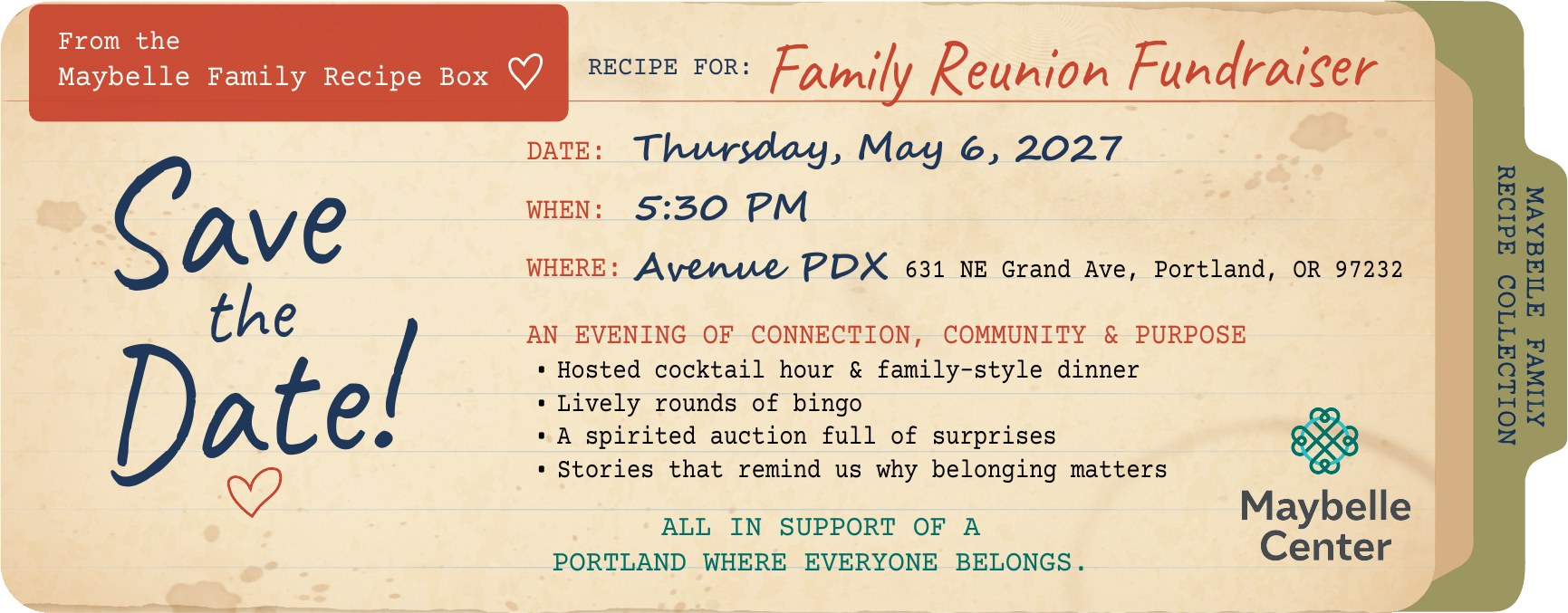
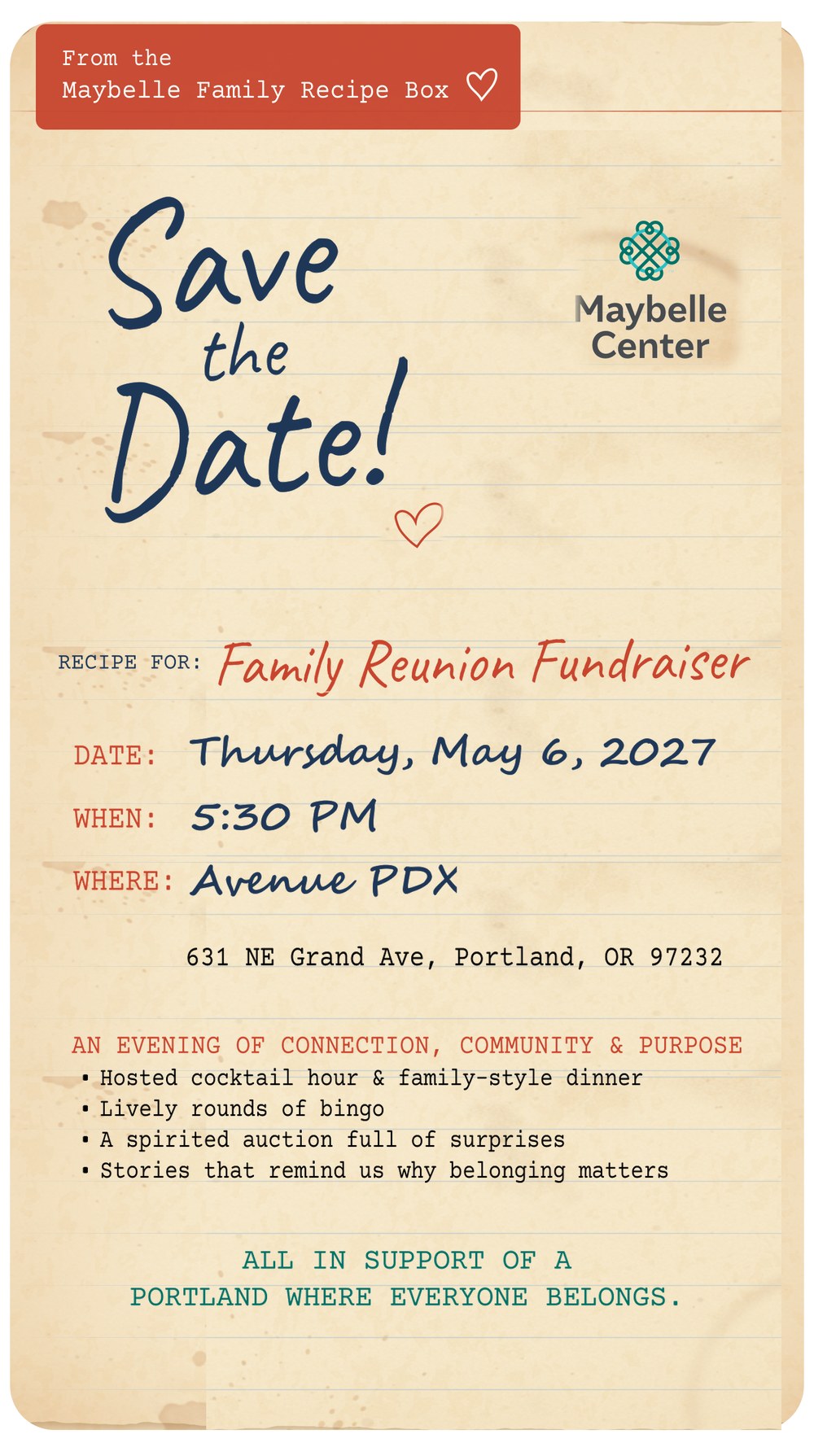
Help build a Portland where everyone belongs.
Neighborhood Programs run almost entirely on donor gifts. Your gift is what keeps the Community Room open.
Maybelle Center
605 NW Couch St.
Portland, OR 97209
503-241-7374
Give Today
Your contribution funds the non-clinical infrastructure that makes belonging possible: the relationships, the stability, the community.